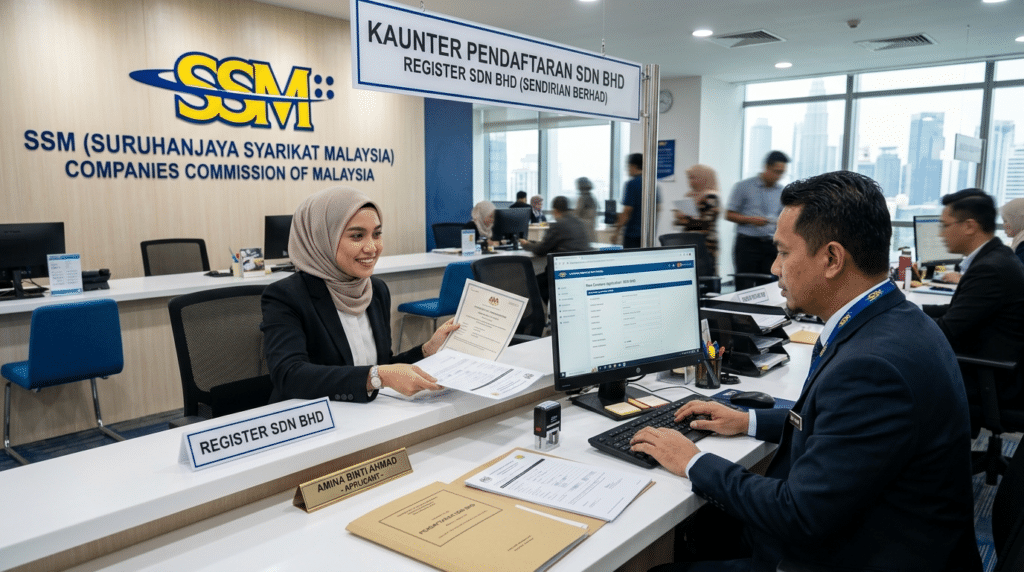

A share transfer Sdn Bhd owners go through, whether bringing in a new investor, restructuring ownership, or an exit, involves more than just signing an agreement. It requires a formal instrument of transfer, stamp duty paid to LHDN, and an update to the company’s statutory registers before it’s legally complete. This guide walks through the full process, how stamp duty is calculated, and the documents you’ll need.
What Counts as a Share Transfer in a Sdn Bhd?
A share transfer happens when an existing shareholder sells or passes their shares to another person or entity, while the company itself stays the same. This is different from a share allotment, where the company issues brand new shares, increasing the total number in circulation. If you’re looking to issue new shares instead, that’s a separate process with its own requirements.
Share Transfer Sdn Bhd: Step-by-Step Process
Step 1: Check the company’s constitution
Before anything else, check whether the company’s constitution imposes any restrictions on share transfers, such as pre-emptive rights (where existing shareholders get first refusal) or director approval requirements. Many Sdn Bhd companies restrict share transfers by default, since private companies are not allowed to freely offer shares to the public.
Step 2: Agree on the terms and draft a Share Sale Agreement
The buyer and seller agree on the number of shares, price, and any conditions. For straightforward transfers between related parties, this may be simple. For a transfer involving a new external investor, the agreement typically covers warranties, conditions precedent, and other protective clauses, and is worth having reviewed properly.
Step 3: Obtain board approval
The board of directors reviews and approves the transfer, especially where the constitution requires it. This is also when the board may conduct basic due diligence on the incoming shareholder.
Step 4: Prepare the instrument of transfer (Form 32A)
The transfer is documented on a Share Transfer Form (commonly known as Form 32A), recording the transferor and transferee’s details, the number and class of shares, and the consideration paid. Both parties sign, with signatures witnessed.
Step 5: Stamp the transfer with LHDN
The instrument of transfer must be stamped through LHDN’s STAMPS system before it’s legally valid. This is where stamp duty is calculated and paid — see the breakdown below.
Step 6: Lodge the stamped form and update the register of members
Once stamped, the form is submitted to the company. The company secretary updates the register of members to reflect the new shareholder, their shareholding, and the date of registration.
Step 7: Issue a new share certificate
A new share certificate is issued to the incoming shareholder, and the previous certificate is cancelled.
Share Transfer Sdn Bhd: How Stamp Duty Is Calculated
Under Item 32(b) of the First Schedule to the Stamp Act 1949, stamp duty on a share transfer is 0.3% (RM3 for every RM1,000) of the value of the shares, whichever is higher between:
| Valuation Method | How It’s Calculated |
|---|---|
| Sale consideration | The actual price agreed between buyer and seller |
| Net Tangible Assets (NTA) | Shareholders’ funds (total assets minus total liabilities) divided across the issued share capital |
| Price Earnings (PE) method | Net profit after tax divided by issued share capital, multiplied by a sector-specific multiplier |
LHDN charges duty on whichever of these produces the highest value, not simply the price the parties agreed on. This catches many business owners off guard, especially when a company has significant retained earnings or net tangible assets, since the NTA-based value can end up well above the nominal sale price.
Example: If a company’s shareholders’ funds total RM800,000 and the shares being transferred represent a proportionate claim on that, the NTA method could value the transfer well above a token sale price of RM1 — and duty would be calculated on the higher NTA figure.
Because this calculation depends on your company’s specific financials, it’s worth having your company secretary or accountant run the numbers before the transfer, so there are no surprises. Get in touch if you’d like us to help work this out for your company.
Share Transfer Sdn Bhd: Documents You’ll Need
- Instrument of transfer (Form 32A), signed and witnessed
- Share Sale Agreement, where applicable
- Latest audited or management accounts, to support the stamp duty valuation
- Board resolution approving the transfer
- Identification documents of the incoming shareholder
- Original share certificate, to be cancelled and reissued
Share Transfer Sdn Bhd Timeline: What Can Delay It
A simple transfer between parties who already agree on terms can move quickly once the paperwork is ready. More complex transfers, particularly those involving new external investors, due diligence, or a valuation dispute, can take longer. Plan around:
- Time to draft and negotiate the Share Sale Agreement, if one is needed
- Time for LHDN to process the stamping, once the form and valuation are submitted
- Internal approval timelines, depending on how quickly your board can convene
Unstamped or improperly stamped transfer documents are not legally valid, and failing to stamp an instrument on time can lead to penalties, so this step shouldn’t be left until the last minute.
Need help transferring shares or working out the stamp duty on a transaction? See our Share Allotment/Transfer service, or get in touch for a clear breakdown.

Frequently Asked Questions
Q: How much is stamp duty on a share transfer in Malaysia?
0.3%, or RM3 for every RM1,000, of the value of the shares — calculated on whichever is highest among the sale consideration, Net Tangible Assets (NTA), or the Price Earnings (PE) method.
Q: What form is used to transfer shares in a Sdn Bhd?
The instrument of transfer, commonly known as Form 32A, which records the transferor, transferee, number and class of shares, and the consideration paid.
Q: Is stamp duty based on the price I actually paid for the shares?
Not necessarily. LHDN calculates duty on the highest of the sale consideration, the Net Tangible Assets method, or the Price Earnings method — so a low or nominal sale price doesn’t automatically mean low stamp duty.
Q: What’s the difference between a share transfer and a share allotment?
A transfer moves existing shares from one shareholder to another; the total number of shares stays the same. An allotment issues brand new shares, increasing the total share capital.
Q: Do I need board approval to transfer shares?
Usually yes, especially where the company’s constitution requires it or restricts transfers, such as through pre-emptive rights for existing shareholders.
Q: What happens after the transfer is stamped?
The stamped form is lodged with the company, the register of members is updated, and a new share certificate is issued to the incoming shareholder.