
If your business is growing, you may need to increase paid up capital Malaysia rules allow through a new share issue. Common reasons include meeting an Employment Pass or licence requirement, bringing in an investor, strengthening your balance sheet for a bank, or putting in more working capital. The process is simple, but it has a legal order of steps that must be followed.This guide explains how paid-up capital works, the steps to issue new shares, and the mistakes to avoid.
How Paid-Up Capital and Share Allotment Work
Paid-up capital is the money shareholders have actually paid into the company for their shares. Under the Companies Act 2016 there is no authorised capital ceiling, so a Sdn Bhd can issue new shares without first raising a limit.
In practice, to increase paid up capital Malaysia companies issue (allot) new shares and receive payment for them. Two things cannot be skipped:
- The company must receive the subscription money.
- The directors need the right approval before they allot the shares.
Allotment of Shares Sdn Bhd: Who Must Approve?
The directors cannot simply allot shares whenever they like. Section 75 of the Companies Act 2016 requires the company’s prior approval, by resolution, before directors allot new shares. There are exceptions, such as an offer made to existing members in proportion to their current shareholding.
If shares are issued without the required approval, the issue can be void and the directors who allowed it can be exposed. That is why the approval should be in writing and in place before the shares are allotted.
Also check these before you start:
- Your company constitution, in case it restricts or sets rules for share issues
- Pre-emptive rights. New shares often have to be offered to existing shareholders first, in proportion to their holdings, unless the constitution says otherwise
- Any shareholders’ agreement, which may require extra consent
Steps to Increase Paid Up Capital Malaysia Sdn Bhd Companies Follow
- Decide the amount and who will subscribe. Agree how many shares are issued, at what price, and to whom.
- Get shareholders’ approval. Pass the required resolution for the allotment. For a private company this is often done by written resolution if all members agree. See AGM for Sdn Bhd for how meetings and resolutions work.
- Pass a directors’ resolution. The board approves the allotment, names the allottees and authorises the company secretary to handle the filing.
- Collect the money. Each subscriber pays the exact subscription amount into the company’s bank account. A bank transfer is best, as a cheque is not treated as received until it has cleared.
- Keep proof of funds. Your company secretary will usually ask for the bank-in slip or a bank statement showing the payment. The name and amount should match the shareholder and the shares being allotted.
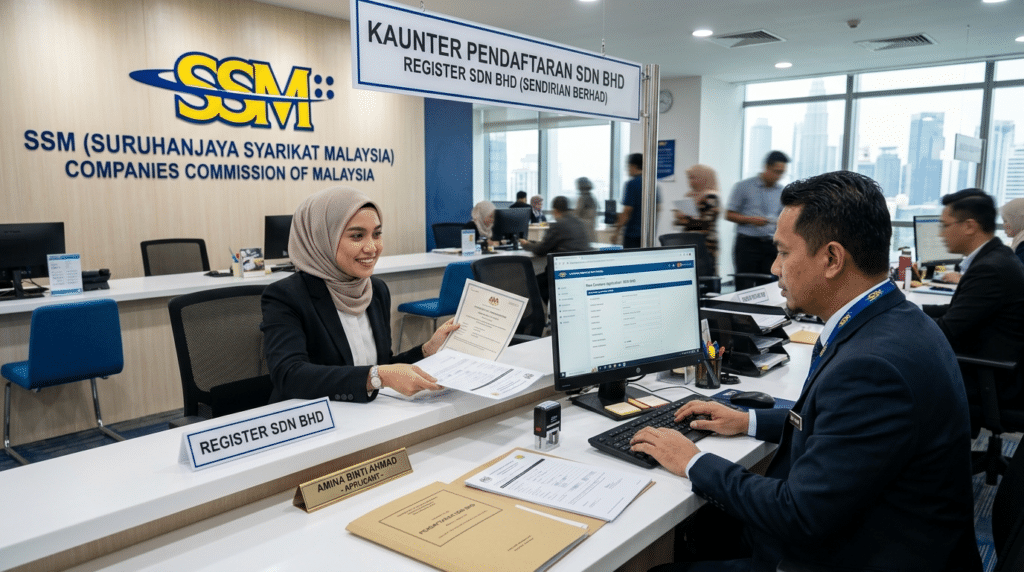
- Allot the shares and lodge the return of allotment with SSM. The company secretary files the return through SSM’s system. The deadline is short, so ask your secretary for the exact date and do not delay.
- Update the records. Update the Register of Members and issue share certificates to the new shareholders.
Documents You Will Typically Need
| Document | Why it is needed |
|---|---|
| Shareholders’ resolution | Gives the directors authority to allot the shares |
| Directors’ resolution | Approves the allotment and the allottees |
| Proof of funds, such as a bank-in slip or bank statement | Shows the company actually received the subscription money |
| Subscriber details | Name, identity or registration number and address of each allottee |
| Return of allotment | The filing that tells SSM about the new shares |
| Updated register and share certificates | The company’s internal record of who owns what |
Why Companies Increase Paid Up Capital Malaysia
- Employment Pass and licensing. Foreign-owned companies often need a higher paid-up capital figure. See How Foreigners Can Set Up a Sdn Bhd in Malaysia.
- New investors. Issuing shares brings in new money and a new shareholder.
- Banks and tenders. A stronger capital base can help with financing and with qualifying for contracts.
- Converting loans. Directors’ loans to the company are sometimes converted into shares, which also needs the same approvals.
The starting point is often the RM1 minimum, which many companies outgrow, and that is when they need to increase paid up capital Malaysia regulators and banks expect to see. See Minimum Requirements to Register a Sdn Bhd for how much capital is sensible to begin with.
Common Mistakes When You Increase Paid Up Capital Malaysia
- Allotting before approval. Get the resolutions signed first, not afterwards.
- Not receiving the money. Shares should not be allotted on a promise to pay later, and a “paper only” increase with no money in the bank is a serious compliance problem.
- Skipping existing shareholders. Ignoring pre-emptive rights can cause a dispute and may breach the constitution.
- Filing late. The return of allotment has a short deadline, and a late filing can attract a penalty.
- Not updating the register or issuing certificates, which leaves your own records out of line with SSM.
- Forgetting beneficial ownership. A change in shareholding can change who counts as a beneficial owner. See Beneficial Ownership Reporting in Malaysia.
If you are transferring existing shares instead of issuing new ones, the process is different. See How to Transfer Shares in a Sdn Bhd.
Planning to increase paid up capital Malaysia style, or issue new shares? See our Share Allotment service or get in touch, and we will take you through the steps for your company.
Frequently Asked Questions
Q: How do I increase paid-up capital in a Sdn Bhd?
You issue new shares and receive payment for them. The company needs the required shareholder approval, a directors’ resolution, proof that the money was received, and a return of allotment lodged with SSM.
Q: Do I need to increase authorised capital first?
No. Under the Companies Act 2016 there is no authorised capital ceiling, so you do not need to raise a limit before issuing shares.
Q: Do shareholders have to approve a share allotment?
Generally yes. Section 75 requires the company’s prior approval by resolution before directors allot shares, with some exceptions such as offers made to existing members in proportion to their holdings.
Q: Do I have to offer new shares to existing shareholders first?
Often yes. New shares typically must be offered to current shareholders in proportion to their holdings, unless the company’s constitution provides otherwise.
Q: Do I need a bank-in slip to increase paid up capital?
You need proof that the company received the subscription money, and a bank-in slip or bank statement is the usual proof. A cheque does not count as paid until it has cleared.
Q: How long do I have to inform SSM after allotting shares?
The deadline is short, so lodge the return of allotment promptly. Ask your company secretary for the exact date that applies to your allotment.