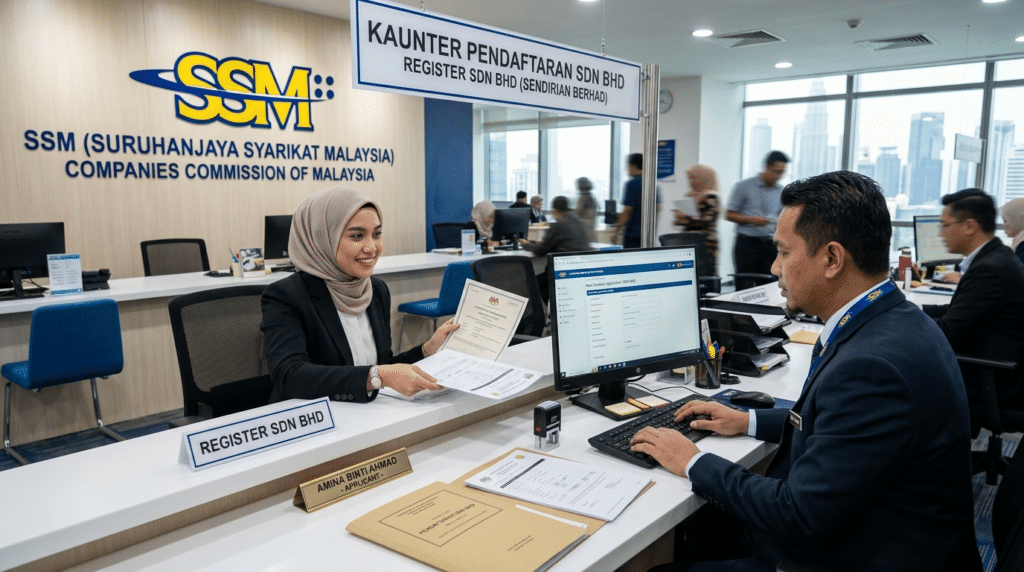

The role of company secretary Malaysia companies rely on goes far beyond paperwork. A company secretary is the officer who keeps your Sdn Bhd compliant with the Companies Act 2016, from statutory filings to board governance, and in many companies is the person who actually knows what’s due, when, and to whom.
If you’re wondering whether you need one at all, see Is a Company Secretary Compulsory for Sdn Bhd in Malaysia? This guide instead covers what the role actually does, day to day and year round.
Role of Company Secretary Malaysia: Legal Basis
The company secretary’s duties are set out across the Companies Act 2016, most directly under Sections 235 to 245. The role is officially a “company officer,” which means the secretary can be held personally liable for certain compliance failures, alongside the directors. This is why the role is restricted to qualified, licensed individuals, and why it is treated as a serious compliance function rather than an administrative add-on.
Role of Company Secretary Malaysia: Summary of Core Duties
1. Maintaining Statutory Registers
Every Sdn Bhd must keep accurate statutory registers, and the company secretary is responsible for keeping them current. This includes:
- Register of members (shareholders)
- Register of directors, managers and secretaries
- Register of directors’ shareholdings
- Register of charges (for any loans secured against company assets)
These registers must be available for inspection and form the backbone of your company’s legal record.
2. Filing with SSM
The company secretary lodges the company’s statutory filings with SSM (Companies Commission of Malaysia), including:
- The annual return, due within 30 days of the incorporation anniversary each year
- Changes to company particulars: new or resigning directors, change of registered address, change of company name, and more, each within its own statutory deadline (usually 14 to 30 days)
- Share allotments and transfers
- Resolutions passed by the board or shareholders
Missing these deadlines creates compliance exposure for the company and its directors, which is the main reason most companies keep this function with a dedicated secretary rather than handling it ad hoc.
3. Supporting Financial Statement Filing
While the directors and, where applicable, the auditor are responsible for preparing financial statements, the company secretary coordinates the filing of these statements with SSM within the statutory deadline (generally 6 months after the financial year end for private companies) and keeps the company’s filing history in order.
4. Organising Board Meetings and the AGM
The company secretary handles the practical and procedural side of governance:
- Issuing notices of board meetings and the Annual General Meeting (AGM), with the required notice period
- Preparing agendas and supporting documents
- Drafting resolutions for the board or shareholders to pass
- Recording and keeping minutes of meetings
Private companies are not always required to hold a physical AGM, but where one is held, or where written resolutions are used instead, the company secretary manages the process either way. See our AGM/EGM and Board Meeting Attendance service if you’d rather this was handled for you.
5. Advising the Board on Compliance and Governance
A company secretary is often the first person to flag when something needs attention: an upcoming filing deadline, a change that needs to be lodged, or a governance requirement the directors may not be aware of. This advisory function is particularly valuable for first-time directors, who are personally responsible for compliance but may not know every requirement under the Companies Act 2016.
6. Custodian of the Common Seal and Company Documents
Where a company still uses a common seal, the secretary is typically its custodian and ensures it is used properly and recorded when applied to documents. The secretary also typically holds or coordinates access to the company’s statutory documents, such as the Certificate of Incorporation and the constitution, where one has been adopted.
7. Supporting Share Transactions
Allotting new shares, transferring existing shares, or restructuring shareholding all involve statutory paperwork and SSM filings that the company secretary manages, working alongside the directors’ decisions on the commercial terms. If your company is going through a share allotment or transfer, see our incorporation guide for how share structure is first set up, and talk to us about handling the transaction itself.
8. Supporting Dividend Declarations
When a company declares a dividend, there are solvency and procedural requirements under the Companies Act 2016 that need to be documented correctly, alongside board resolutions. A company secretary helps make sure this is done properly and keeps the paper trail SSM and auditors expect. See our Dividend Planning with Cashflow Forecast service.

What the Role of a Company Secretary in Malaysia Does Not Cover
It’s worth being clear on the boundary. A company secretary generally does not:
- Make business or strategic decisions — that remains with the directors
- Prepare or audit financial statements — that’s the role of your accountant or auditor
- File the company’s corporate tax return — that’s handled with LHDN, typically by a tax agent or accountant
- Act as a director, unless they separately hold that role, subject to the restrictions on dual appointment under Section 242
A good company secretary works closely with your accountant, auditor and tax agent, but each role stays distinct.
Why the Role of Company Secretary Malaysia Companies Need Matters More Than It Looks
Many business owners only notice the company secretary’s role when something goes wrong: a missed filing, a director change that wasn’t lodged in time, or a dividend that wasn’t properly documented. Because the secretary is a company officer under the Act, poor performance in this role carries real compliance risk, not just inconvenience. Choosing a company secretary who is proactive about deadlines, rather than only reactive when asked, makes a measurable difference over a company’s life.
Frequently Asked Questions
Q. What is the role of a company secretary in Malaysia?
The company secretary maintains statutory registers, files documents with SSM (including the annual return), organises board meetings and the AGM, advises the board on compliance, and supports transactions such as share allotments and dividend declarations.
Q. What are the duties of a company secretary under the Companies Act 2016?
Duties are set out mainly in Sections 235 to 245, covering appointment, maintaining registers, lodging statutory filings, and supporting company governance. As a company officer, the secretary can be held personally liable for certain compliance failures.
Q. Is a company secretary responsible for filing taxes?
No. Corporate tax filing with LHDN is typically handled by a tax agent or accountant, not the company secretary.
Q. Can a company secretary also be a director?
Generally no, where the Companies Act 2016 requires the two roles to act separately. See Section 242 for the specific restriction.
Q. Does a company secretary attend board meetings?
Yes. The company secretary typically issues notices, prepares the agenda, and records minutes for board meetings and the AGM.
Want this handled for you? See our Company Secretary services for a free quote.