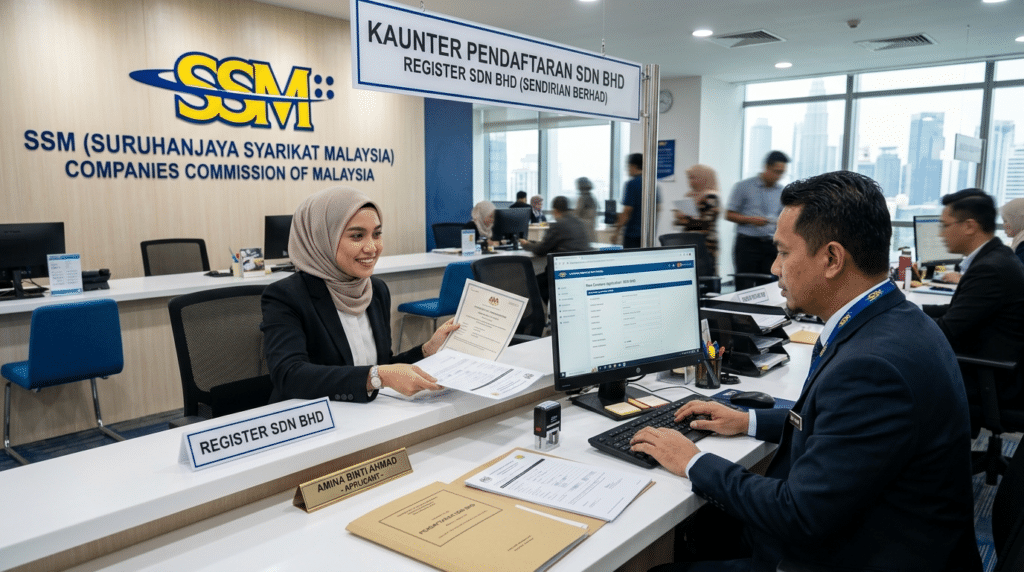
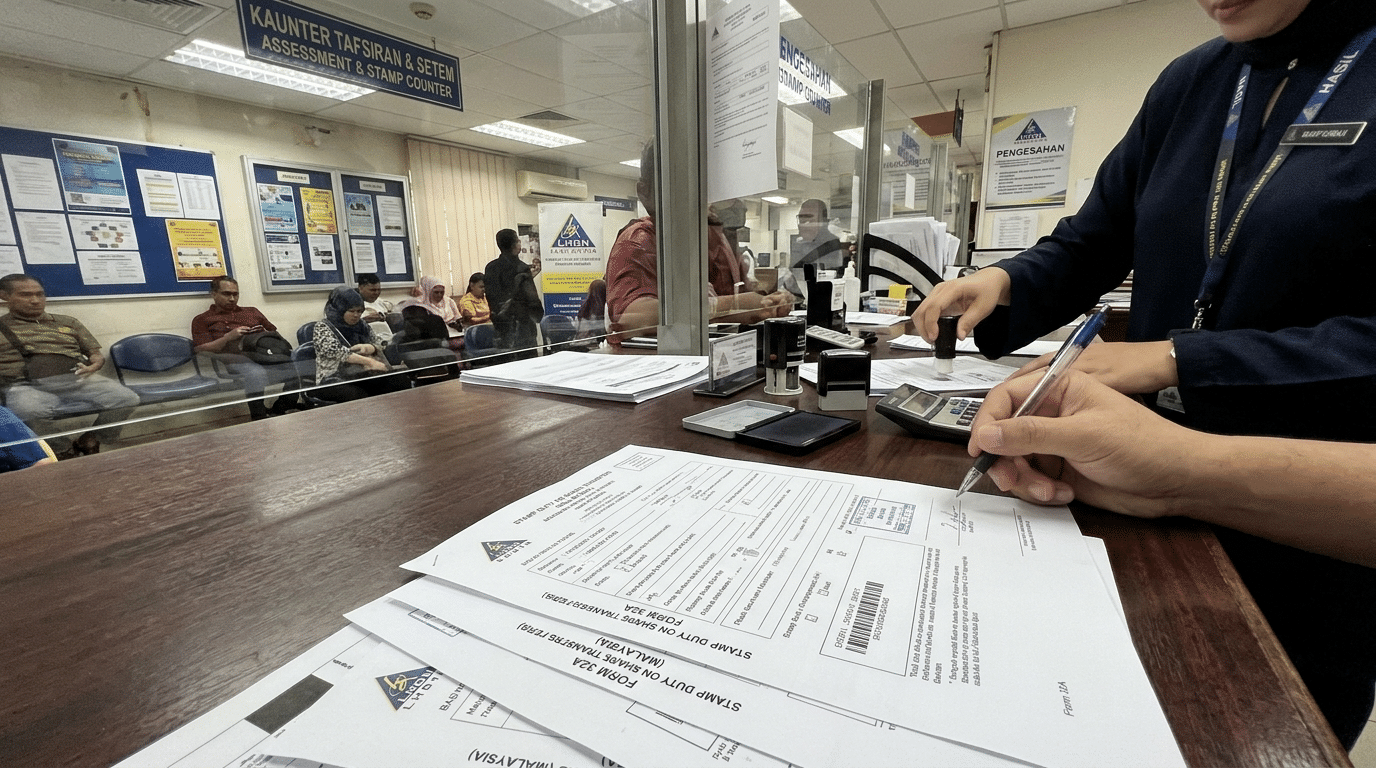
When shares in a Sdn Bhd change hands, the buyer and seller often focus on the price, and forget that the transfer has to be stamped. The stamp duty share transfer Malaysia rules are simple on the rate, but the tricky part is working out the value the duty is charged on, because it is not always the price you agreed.
This guide explains the rate, how the value of the shares is decided, a worked example, the deadline and the late penalties. It is general information, so confirm the figures with LHDN or your adviser before you stamp.
Stamp Duty Share Transfer Malaysia: The Basics
Stamp duty is a tax on legal documents. When shares in an unlisted company such as a Sdn Bhd are transferred, the form of transfer has to be stamped.
- Rate: 0.3% of the value of the shares, which is RM3 for every RM1,000.
- Which document: The form of transfer of securities, signed by the seller and the buyer.
- Who stamps it: Usually the buyer presents it, but the parties can agree who bears the cost.
- Why it matters: An unstamped transfer cannot be properly registered, and late stamping brings penalties.
For the full transfer process, see How to Transfer Shares in a Sdn Bhd.
How Is the Value of the Shares Decided?
The duty is charged on the value of the shares, not simply the price. Under LHDN’s guidelines on stamping unquoted shares, the value depends on the type of company:
| Company | Value used for stamp duty |
|---|---|
| Profit-making or loss-making company | The higher of the net tangible assets (NTA) value of the shares and the price paid |
| Newly incorporated company | The price paid (consideration) |
| Inactive company (dormant, zero revenue or meeting the threshold) | The price paid (consideration) |
| Transfer that needs Securities Commission approval | The price or value approved by the Securities Commission |
NTA means the company’s total assets, less intangible assets, less total liabilities. This is why a share transfer for a very low price can still attract duty on a much higher value.
Stamp Duty Share Transfer Malaysia: How to Calculate It
For an operating company, the calculation has three steps:
- Work out the value of the shares transferred. NTA divided by the number of issued shares, multiplied by the number of shares transferred.
- Compare it with the price paid. Take the higher figure as the dutiable value.
- Apply 0.3%. That is the stamp duty payable.
Illustrative example. A profit-making Sdn Bhd has 100,000 shares and an NTA of RM1,000,000. A shareholder transfers 50,000 shares for RM50,000.
| Step | Figure |
|---|---|
| NTA value of the shares transferred | RM1,000,000 ÷ 100,000 × 50,000 = RM500,000 |
| Price paid | RM50,000 |
| Dutiable value (the higher) | RM500,000 |
| Stamp duty at 0.3% | RM1,500 |
Notice that the duty is charged on RM500,000, not the RM50,000 price. Your own figures will depend on your company’s latest accounts.
Stamp Duty Share Transfer Malaysia: Deadline and Penalties
The form of transfer must be submitted for stamping within 30 days of signing. If it is signed outside Malaysia, the 30 days run from when it is received in Malaysia.
Late stamping carries a penalty on top of the duty. Currently these are:
- stamped within three months after the deadline: the greater of RM50 or 10% of the duty; and
- stamped later than that: the greater of RM100 or 20% of the duty.
The rules and any relief programmes can change, so check with LHDN before you rely on these figures.
Documents You Need to Stamp a Share Transfer
- The signed form of transfer of securities.
- The company’s latest audited accounts, so that the NTA can be worked out. Companies that qualify for audit exemption, such as dormant companies, may not need them. See Dormant Company in Malaysia.
- Any share transfer agreement and approvals, if relevant.
Make sure your accounts are up to date, because the duty depends on them. See MBRS and XBRL Financial Statement Filing for Sdn Bhd.
Tips to Avoid Stamp Duty Problems
- Estimate the duty before you agree the price. It may be higher than you expect.
- Stamp within 30 days of signing. Put the date in your calendar.
- Do not understate the price. The duty is based on the higher of the price and the value.
- Keep the accounts ready, because the stamp office needs them.
- Agree who pays. Put it in the share transfer agreement.
- Update your records after stamping. See Statutory Registers and Minute Books for Sdn Bhd.
Planning a share transfer and not sure about the paperwork? See our company secretarial services or get in touch, and we can help you with the resolutions, registers and SSM update.
Frequently Asked Questions
Q: How much is stamp duty on a share transfer in Malaysia?
The rate is 0.3% of the value of the shares, which is RM3 for every RM1,000. The value is the higher of the price and the NTA-based value for most operating companies.
Q: How is the value of unlisted shares decided for stamp duty?
For a profit-making or loss-making company, it is the higher of the NTA value of the shares and the price paid. For a new or inactive company, it is the price paid.
Q: What is the deadline to stamp a share transfer?
30 days from signing in Malaysia, or from receipt in Malaysia if it was signed abroad.
Q: What is the penalty for late stamping?
Currently the greater of RM50 or 10% of the duty if stamped within three months after the deadline, and the greater of RM100 or 20% of the duty after that. Please confirm the latest rules with LHDN.
Q: Who pays the stamp duty on a share transfer?
Usually the buyer presents the form for stamping, but the parties can agree who bears the cost. Put it in your agreement.
Q: Do I need audited accounts to stamp a share transfer?
The company’s latest audited accounts are generally needed to work out the NTA, unless the company qualifies for audit exemption.
This article is general information and not legal or tax advice. Stamp duty rules can change, so please confirm the current position with LHDN or your adviser.