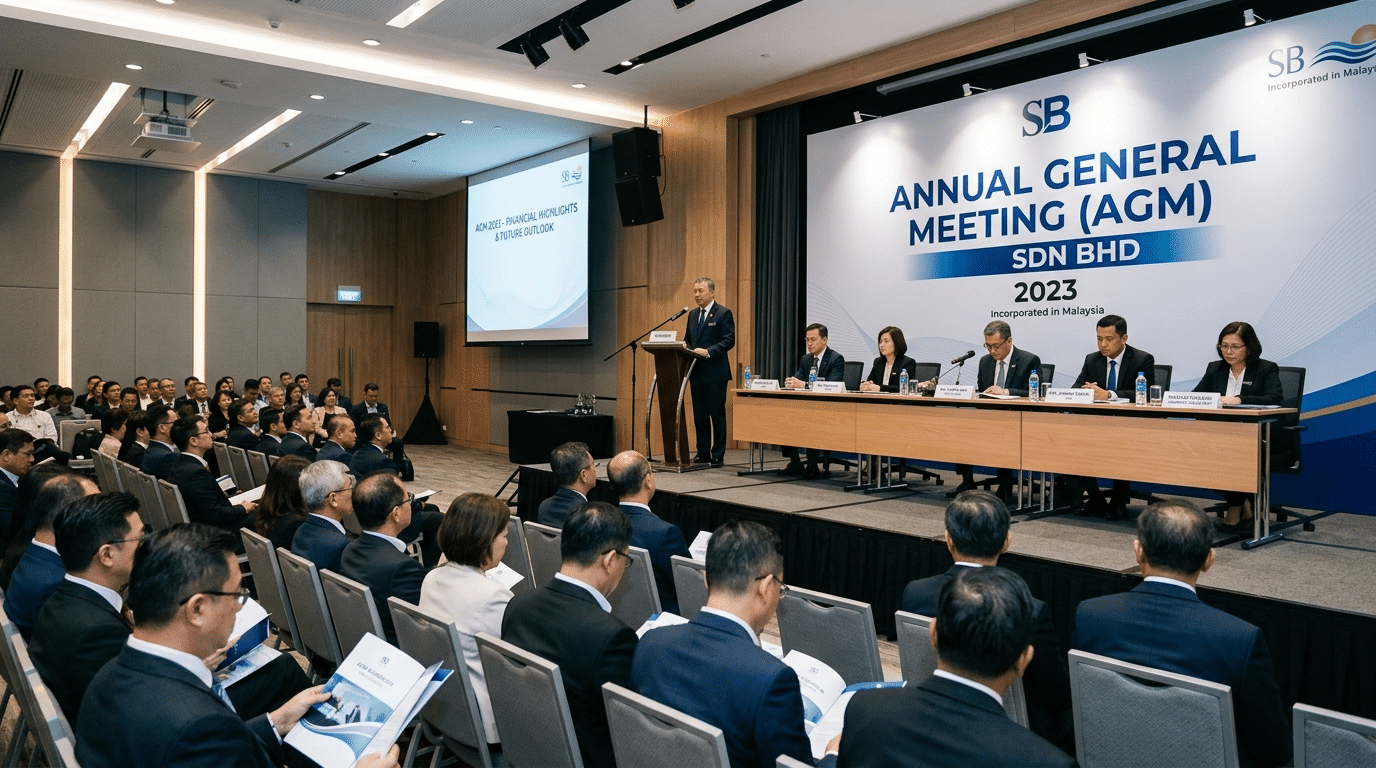
If you’re wondering whether an AGM Sdn Bhd companies in Malaysia must hold is a legal requirement, the short answer is no — not by default. Since the Companies Act 2016 came into force, private companies are no longer required to hold an Annual General Meeting unless their own constitution says otherwise. But that doesn’t mean there’s nothing to do instead, and some companies still choose to hold one.
This guide explains what changed, what replaces the AGM for most Sdn Bhd companies, and when you might still need or want to hold one.
Do Private Companies Need an AGM in Malaysia?
Under the old Companies Act 1965, every company, public or private, had to hold an AGM once a year. The Companies Act 2016 changed this: private companies (Sdn Bhd) are no longer required to hold an AGM, unless:
- The company’s own constitution specifically requires one, or
- Shareholders holding at least 5% of voting rights request one
Public companies (Bhd) are different — they are still required to hold an AGM every year under the Companies Act 2016, within the statutory timeframe.
What Replaces the AGM for a Sdn Bhd?
Instead of calling a physical meeting, private companies can pass decisions through a written resolution, circulated to shareholders and signed instead of being voted on at a meeting. This covers most of what an AGM would otherwise be used for, including:
- Approving financial statements
- Re-appointing or appointing an auditor
- Declaring dividends
- Approving directors’ fees or benefits, where applicable
A written resolution is generally passed once the required majority of shareholders sign, without needing everyone in the same room — which is one reason most small and medium Sdn Bhd companies have moved away from holding a physical AGM altogether.
AGM Sdn Bhd: What You Still Must Do Even Without One
Not holding an AGM doesn’t remove your other statutory obligations. You still need to:
- Circulate financial statements to members within 6 months of the financial year end
- Lodge the annual return with SSM within 30 days of your incorporation anniversary — see Annual Return Filing in Malaysia
- Keep minutes or records of any written resolutions passed, as part of your statutory registers
- Appoint or re-appoint an auditor each year, unless your company qualifies for audit exemption
In other words, the AGM itself became optional, but the underlying compliance — financial reporting, shareholder approval, and SSM filings — didn’t go away. It just happens through a different mechanism.
When Might a Sdn Bhd Still Hold an AGM?
Even though it’s not compulsory, some private companies choose to hold an AGM, or are required to by their own rules, in situations like:
- The company’s constitution explicitly requires an annual meeting
- Shareholders want a formal forum to discuss company performance, especially with multiple unrelated shareholders
- Investors or joint venture partners expect regular, in-person reporting as part of their agreement
- The board wants to use the occasion to pass several resolutions and address questions at once, rather than circulating separate written resolutions
If your shareholding is more complex, or you have external investors, it’s worth checking your constitution and any shareholder agreement to see whether an AGM is actually required in your case, even though the law itself doesn’t mandate it.
What Happens at an AGM, If You Hold One?
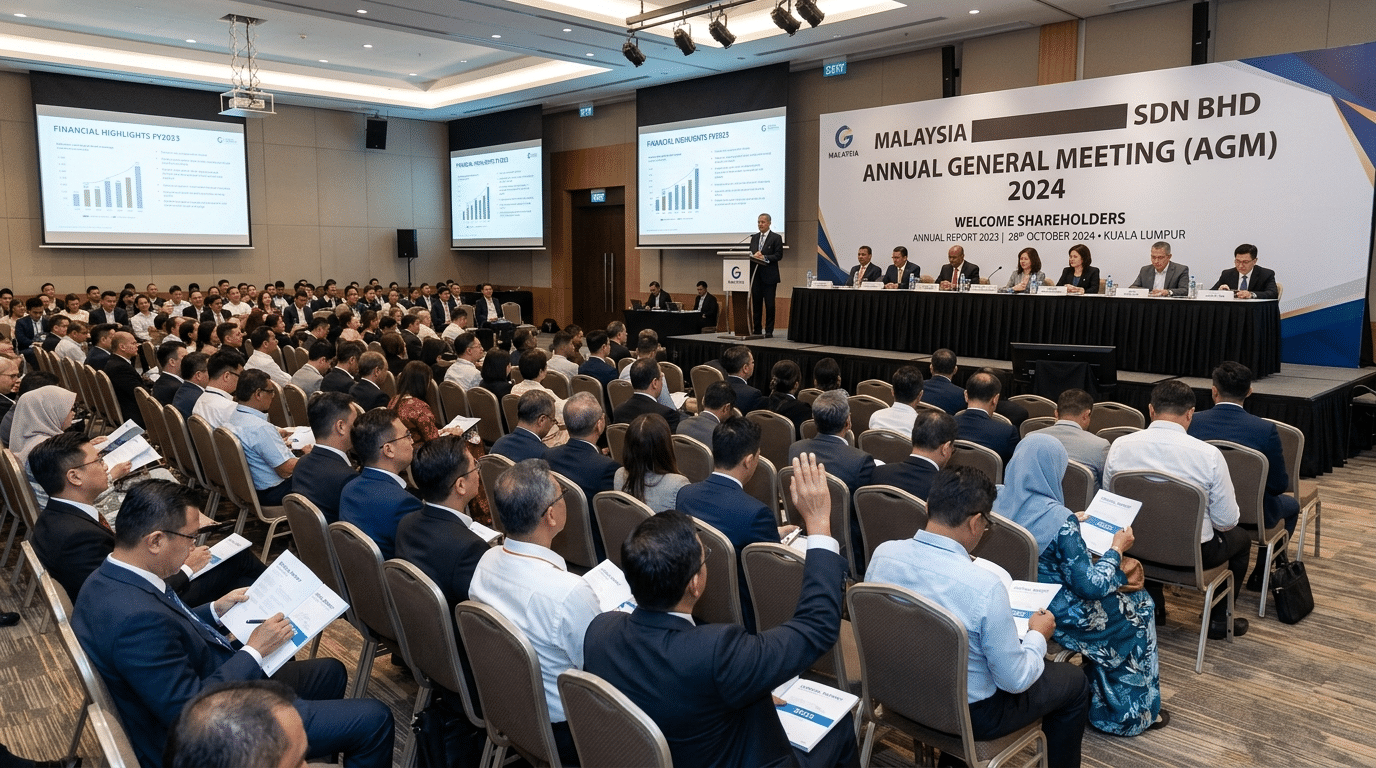
For companies that do hold an AGM, whether by choice or by constitution, typical business includes:
- Tabling and approving the audited (or unaudited, where exempt) financial statements
- Re-electing or appointing directors, where applicable
- Re-appointing the auditor and fixing their remuneration
- Declaring dividends, if proposed
- Any other business shareholders wish to raise
Proper notice must be given to shareholders in advance, and minutes should be kept as part of the company’s statutory records. See our guide on the role of a company secretary for who typically organises and documents this.
Need help deciding whether your company should hold an AGM, or want written resolutions prepared instead? See our AGM/EGM and Board Meeting service, or get in touch for guidance specific to your company.
Frequently Asked Questions
Q: Is an AGM compulsory for a Sdn Bhd in Malaysia?
No, not by default. Under the Companies Act 2016, private companies are not required to hold an AGM unless their constitution specifically requires it, or shareholders holding at least 5% of voting rights request one.
Q: What replaces the AGM for private companies?
Written resolutions. Shareholders can approve financial statements, appoint auditors, declare dividends, and pass other decisions by signing a written resolution instead of meeting in person.
Q: Do public companies (Bhd) still need to hold an AGM?
Yes. Public companies remain required to hold an AGM every year under the Companies Act 2016.
Q: If my Sdn Bhd doesn’t hold an AGM, do I still need to file financial statements?
Yes. Financial statements must still be circulated to members within 6 months of the financial year end, regardless of whether an AGM is held.
Q: Can a Sdn Bhd choose to hold an AGM even if it’s not required?
Yes. Some companies still hold one, whether by choice, by their constitution, or to satisfy investor or shareholder expectations.
Q: How do shareholders force a company to hold an AGM?
Shareholders holding at least 5% of voting rights can request that the company hold a general meeting.